Barbara Forever
7:00pm
doors at 6:30
_
IRL Box Office at 534 Congress St.
Cash only. No fees.
Friday 12-6 pm + Saturday 12-4 pm
dir. Brydie O’Connor
101 min.
If we’re experimenting with our lives and the way we’re going to live, our film and our art should also be experimental. It breaks tradition, and makes you think in a broader way. It’s the way I experience the world.
— Barbara Hammer
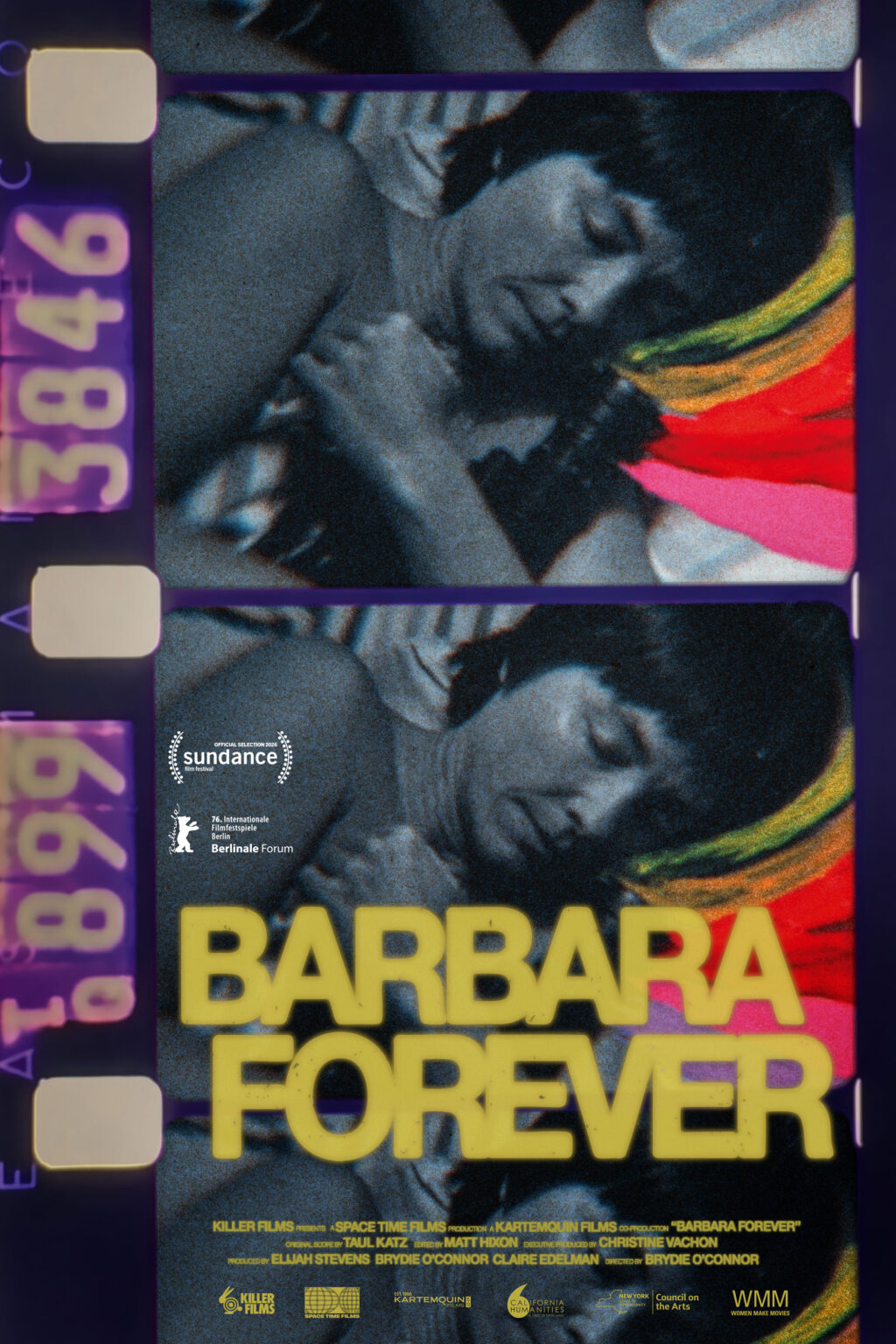
BARBARA FOREVER explores the films, archive, and ongoing cultural impact of experimental filmmaker Barbara Hammer, revealing her ingenious lifelong artistic effort to create and record lesbian histories, personal and societal. Through her own images and words, the film centers Hammer as a prism of the cultural ecosystems around her—through the feminist and queer movements in 1970s San Francisco, the male-dominated New York art world of the 1980s, the New Queer Cinema movement of the 1990s, and expanded LGBTQIA+ representation in art and culture in the 2000s.
Driven by her canon of over eighty films, a vast collection of unreleased archival materials—hundreds of hours of footage, personal photographs and ephemera, and extensive audio interviews—BARBARA FOREVER tells Barbara Hammer’s story through her own voice and visual perspective, making her the expert on her life, vision, and motivations.
Barbara Hammer’s films break taboos around female sexuality, aging, illness, and queer love, often using her own body as a site of exploration and political power.
Through the course of the film, she shows us that the personal is not only political, the personal is historical. Looking to Barbara Hammer as one of the first filmmakers to put a full lesbian life on screen that wasn’t there before, her work becomes a blueprint for a new generation of queer and radical artists to write their own histories into existence. This exploration of both Barbara Hammer’s life, work, archive, and her ongoing legacy provides an urgent, necessary story of queer life, feminist history, and American cinema.