
Marisa Anderson
8:00pm
doors at 7:30
$2 off for SPACE members
_
IRL Box Office at 534 Congress St.
Cash only. No fees.
Friday 12-6 pm + Saturday 12-4 pm
Marisa Anderson returns to SPACE with her border-transcending sound, fusing folk, blues, country, and jazz traditions with elements of minimalism, electronic music, 20th century classical and drone at the intersections of artistry and expression with form and tradition.
The New Yorker calls Anderson ‘one of the most distinctive guitar players of her generation’, while NPR refers to her as among ‘this era’s most powerful players’. Her work has been featured in Billboard, Rolling Stone, NPR, SPIN, the BBC and The Wire. Festival appearances include Big Ears, Pitchfork Midwinter, Le Guess Who and the Copenhagen Jazz Festival.
Anderson’s discography includes five solo records and multiple collaborations. Her latest release, Lost Futures (2021), is a collaboration with guitarist William Tyler. In 2020 Anderson released The Quickening with drummer Jim White (Dirty Three, Xylouris White).
Classically trained, she honed her skills playing in country, jazz and circus bands. and currently tours extensively throughout Europe and North America.
The Anthology of UnAmerican Folk Music is a collection of nearly one thousand songs culled from the private record collection of the late Harry Smith. Assembled by Anderson after a chance encounter led to an opportunity to study and explore this treasure trove of music, the Anthology focuses on music from places that the United States has been in conflict with since 1970: Southeast Asia, the USSR and the Arabic and Islamic regions of the world. In Volume 1 Anderson presents her own deeply personal iterations of nine songs from the Anthology. Composed, transcribed and arranged through a process of trial and error, deep listening and research, Anderson charts a musical course from Afghanistan to Vietnam via Yemen, Cambodia and Turkmenistan. Interpretations of compositions ranging from Pakistani qawwali to Syrian taqsim are played with Anderson’s deft and practiced hands. Each piece on the album stands as a dialogue between Anderson and the original source recording, refracted through the prism of her own unique musical lens. Anderson’s contribution to this dialogue ultimately invites the listener to join her in asking: “Who are the people we’ve been told in our lifetimes are “unamerican?” What have we lost or been denied access to in the fallout from that label?”
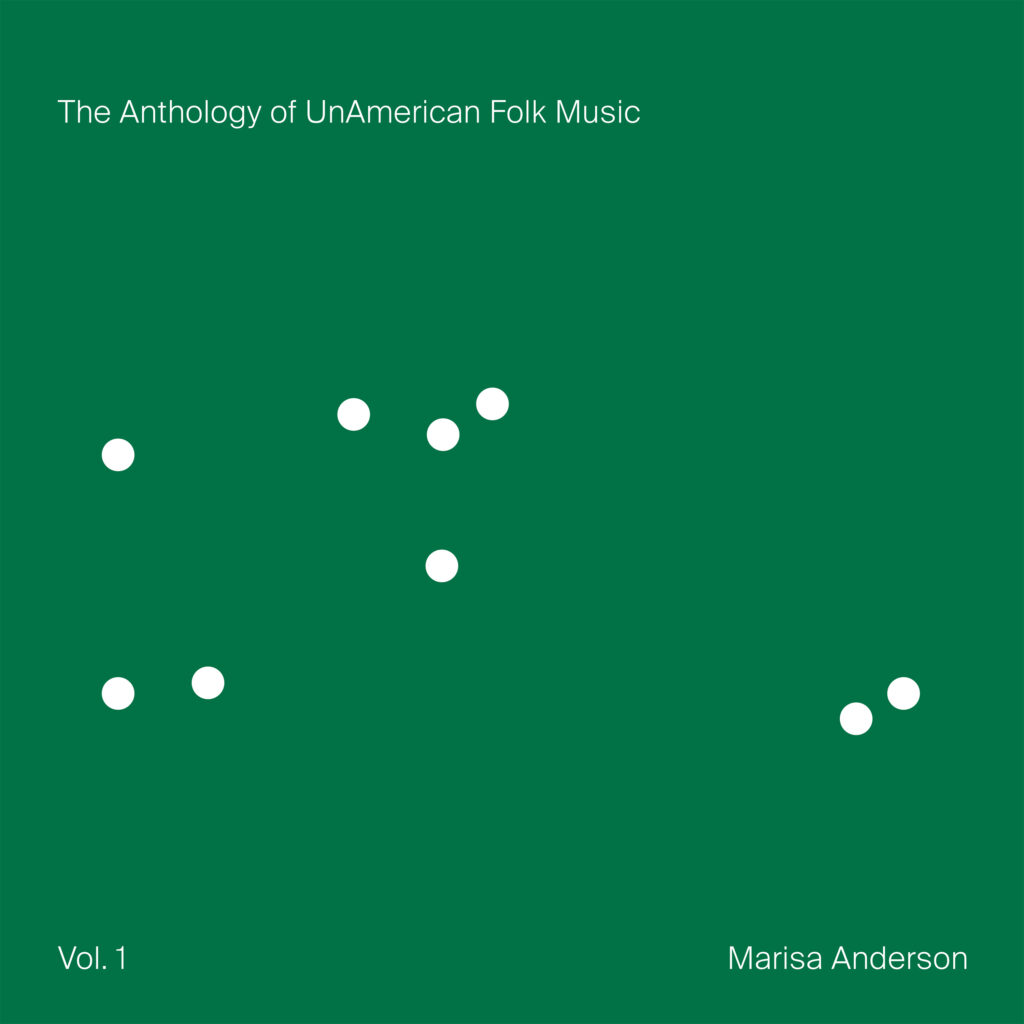
The ongoing project of the Anthology centers curiosity and a commitment to deep listening as it seeks to build bridges with communities and cultural practices from across the globe. Anderson openly acknowledges the limitations she was working with which include an historic lack of access to traditions outside of US markets and frames of reference, improper documentation within the source material, and the need to operate within a finite amount of time for explorations of vast cultural traditions. For Anderson, these are key pieces to the dialogue. “I am a musician, not an ethnomusicologist, or an anthropologist,” Anderson notes. “I’m curious about how music is made, organized and shared. I am interested in how people and music move across the world, how war, migration, nomadism, colonization and contemporary and historical economic dynamics affect music and musicians. What is the musical relationship of people to place? How is that relationship altered when shifting borders or global conflicts curtail movement or force migration into or away from a place? What do we carry with us when we leave home, and what do we bring home from faraway places?”
‘One of the best emotional mediums in the field of solo guitar, Anderson is a master of lovely melancholy.’ – Pitchfork