
Lady Lamb with Greg Jamie @ Penn Landing, Norway
7:00pm
doors at 6:00pm
$40 day of show
$3 off for SPACE and Lights Out members
overnight camping available
_
IRL Box Office at 534 Congress St.
Cash only. No fees.
Friday 12-6 pm + Saturday 12-4 pm
Lights Out presents Lady Lamb at Penn Landing, in partnership with SPACE.
Set at a former industrial cannery on the banks of Lake Pennesseewassee in Norway, Maine, Penn Landing sits on six acres of waterfront overlooking Ordway Grove, home to Maine’s largest white pines. The concert will take place in the center of a site-specific art installation built inside the space. More details on the full experience are coming soon, but trust us, you’re going to want to be there.
Make a day of it! The Norway Maine Arts Festival runs 10am-4pm just down the street before the show.
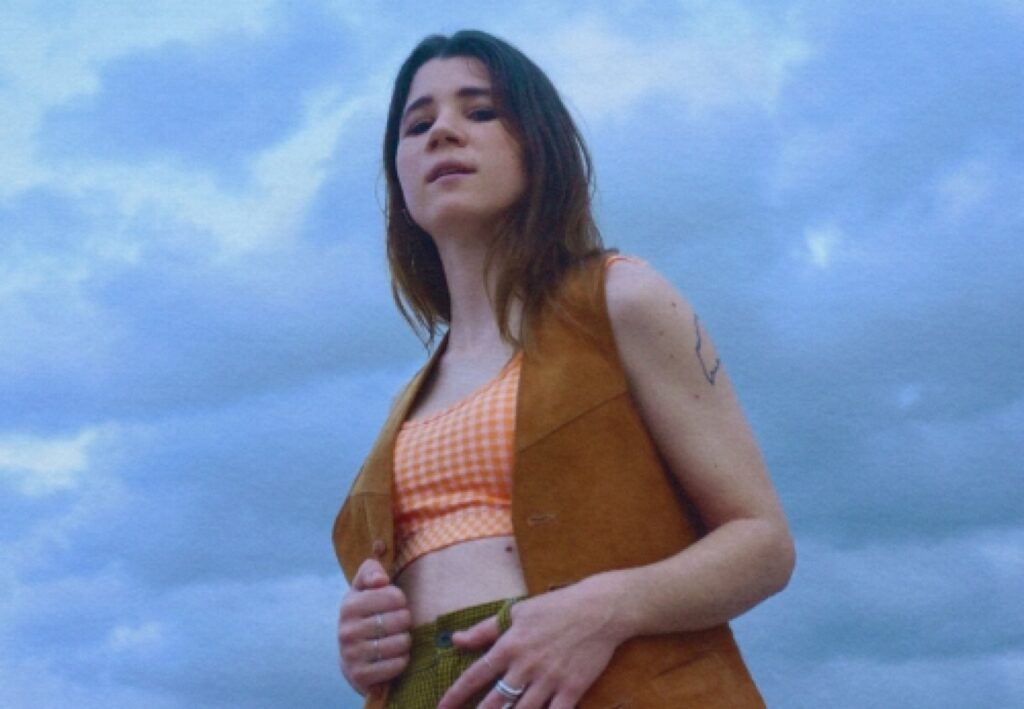
From her early days, staying late after-hours at her video rental store job in Maine to record songs, to co-producing and arranging her four studio records, Aly Spaltro has remained focused on music that connects, empowers and builds community. She built her fanship the old-fashioned way, getting in front of audiences and projecting her poetic confessionals, silencing rowdy crowds with an a cappella opening song in the center of a dark stage. Spaltro was quick to develop a reputation as a breakout star in New England, and then expanded slowly outwards, moving to New York at twenty to continue work on the songs that would become Ripely Pine. Her voice has never wavered, has grown more honest and open with time, and anyone witnessing the long lines of fans seeking signatures after her performances can see how her work has impacted fans. Her live shows are revelations, a further deep dive into what makes Ripely Pine such a mainstay.
Spaltro is celebrating ten years of Ripely Pine with the release of a 5xLP Box Set, IN THE MAMMOTH NOTHING OF THE NIGHT out August 18 on Ba Da Bing Records. With the original songs remastered, as well as reams of additional material produced and arranged by Spaltro and mixed by original co- producer Nadim Issa, IN THE MAMMOTH NOTHING OF THE NIGHT captures the time, mood, art and ambition of Aly Spaltro in her early twenties, who had already accumulated years of playing and self-recording experience before laying down tracks for this giant of a debut.
“I wrote some of these songs when I was 18, learning how to play the instruments and record with my digital 8-track along the way,” Spaltro says, reflecting on the time. She talks about IN THE MAMMOTH NOTHING OF THE NIGHT with a sense of a mission. “These tracks have haunted me, because they haven’t had a home for all these years. I found all these alternate track listings in my notebooks. Any of them could have ended up on the record,” Spaltro says. “This box set is a way to honor that whole time, the beginning of the path of my life. Releasing this project feels like just that; I’m able to look back on where I’ve come from, and then gently close that door behind me and keep moving, keep growing.”
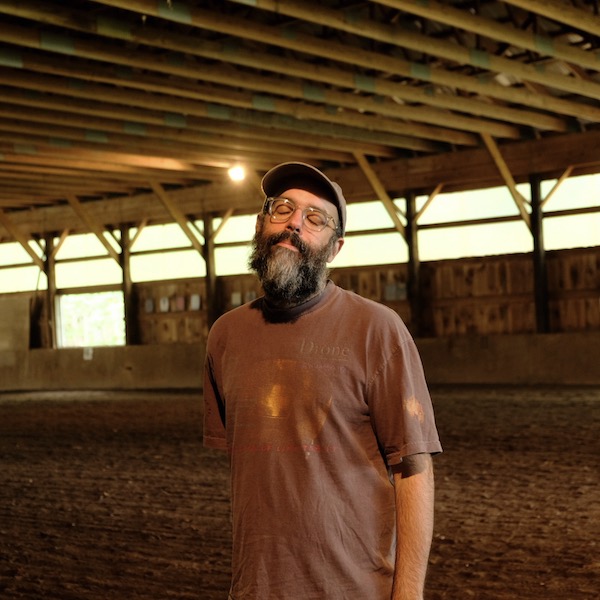
An established devotee of dark weirdness, Greg Jamie brings forth his second solo album on Orindal: Across a Violet Pasture. Over ten songs, Jamie journeys to the strange, enchanted center of his personal vision. This is a space between sleeping and waking, where Jamie’s woodsy, weary voice guides us forward.
It’s no surprise that the latest from the Maine-based musician and visual artist aims to haunt, but this experimental folk pop does it in a way that’s more playful than funereal. It lays a shimmering floor over the abyss.
Across a Violet Pasture evokes, on different tracks — a sea shanty, a cowboy song, and lounge music for a David Lynch film. A beaten-up vintage drum machine provides the pulse for one song, while another conjures the cavernous panic of Suicide. But the album doesn’t adhere too strictly to any gesture or influence. This is Jamie’s unique blend.
Many of the songs on Across a Violet Pasture are about going away — in search of freedom, alternatives, and a sense of meaning. There are mentions of the open road, a passage through the woods, distant shores, and the countryside. Yet Jamie’s descriptions of everyday life are mostly hints of a real world, quickly interrupted by bursts of the unexpected. Stories about relationships and inner turmoil are suggested. A broken or restless heart cries out. But the narratives are never fully told. In “Beautiful Place,” the singer speaks as if in a dream: “I took the witches by the hand / To tell me where I am / And take me back inside the fold.”
Death also haunts the singer, and images of violence — a noose, body parts by a tree — suggest nightmarish turns. But the songs are full of nostalgic sweetness and many of the melodies are sunny. The most disorienting lines often become the catchiest refrains. In “I’d Get Away,” Jamie repeats: “It’s hard to realize that the moment in my head / Is better often dead / That’s all.” And in “When I Die,” the title phrase becomes a kind of chant, as Jamie sings: “When I die… That’s when I die.”
For a record with folk roots, Across a Violet Pasture is intricately layered. Distinct instrumental parts blend into indeterminate noises; sci-fi static, swoons, scrapes, and hisses. Echoed sounds suggest distances: caves, wells, and long, twisting paths. We are lost inside a fugue-like soundscape.
Greg Jamie describes the result as something that “might sound like it’s on a dirty cassette tape, buried and unearthed, but has muffled brightness. Something that might sound better early in the morning if you haven’t slept.” Jamie’s voice is spectral in this setting — always doubled, reverberating, or joined by other singers’ harmonies. It feels like he’s standing at the mast of a ship, guiding a band of skeletons through a fog.
It makes sense that this kind of music came out of a therapeutic process between Jamie and his longtime collaborator Colby Nathan, another musician from Maine’s experimental scene. Over several years, Jamie went to Nathan’s home in South Portland, Maine to work through what the songs meant to him and how they might unfold as recordings. This process, with Nathan’s added parts (bass, synth, guitar, vocals) and production decisions, shaped the sonic atmospheres of the record. About Colby Nathan, Jamie writes: “I see them as sort of an interpreter of my ideas, placing them in a world or vocabulary that I don’t always easily access.”
Other contributors on the record include Robert Pycior (of O’Death) on violin, Tom Kovacevic on Ney flute (processed by Colby Nathan via analog tape loops), and, on one song, backing vocals from Colorado-based folk singer Josephine Foster (who serendipitously happened to be traveling through Maine during the album sessions). That song, “Beautiful Place,” is a plea to a broken world with the repeated refrain “Can there be a beautiful place where we can go in this world?” It’s a deceptively simple question, but something universal, and sounds more like empty longing as the song goes on, the question never answered.
The strength of Across a Violet Pasture is its intuitive rawness. It’s art made at home; the product of a deep inner life and a personal mythology. And like Greg Jamie’s uncanny watercolor paintings, this record juxtaposes muted, dark backgrounds with shocks of vibrant color. The “violet pasture” of the title evokes a mix of passionate red and cool, sorrowful blue. The resulting purple is mystical and a little extravagant. It’s a color hardly found in nature. And when it is, like the violet flower, it survives only in dappled forest shade. Admired by hermits, fauns, and idealistic weirdos, there’s a secretive, melancholy, and ephemeral beauty to this work.