
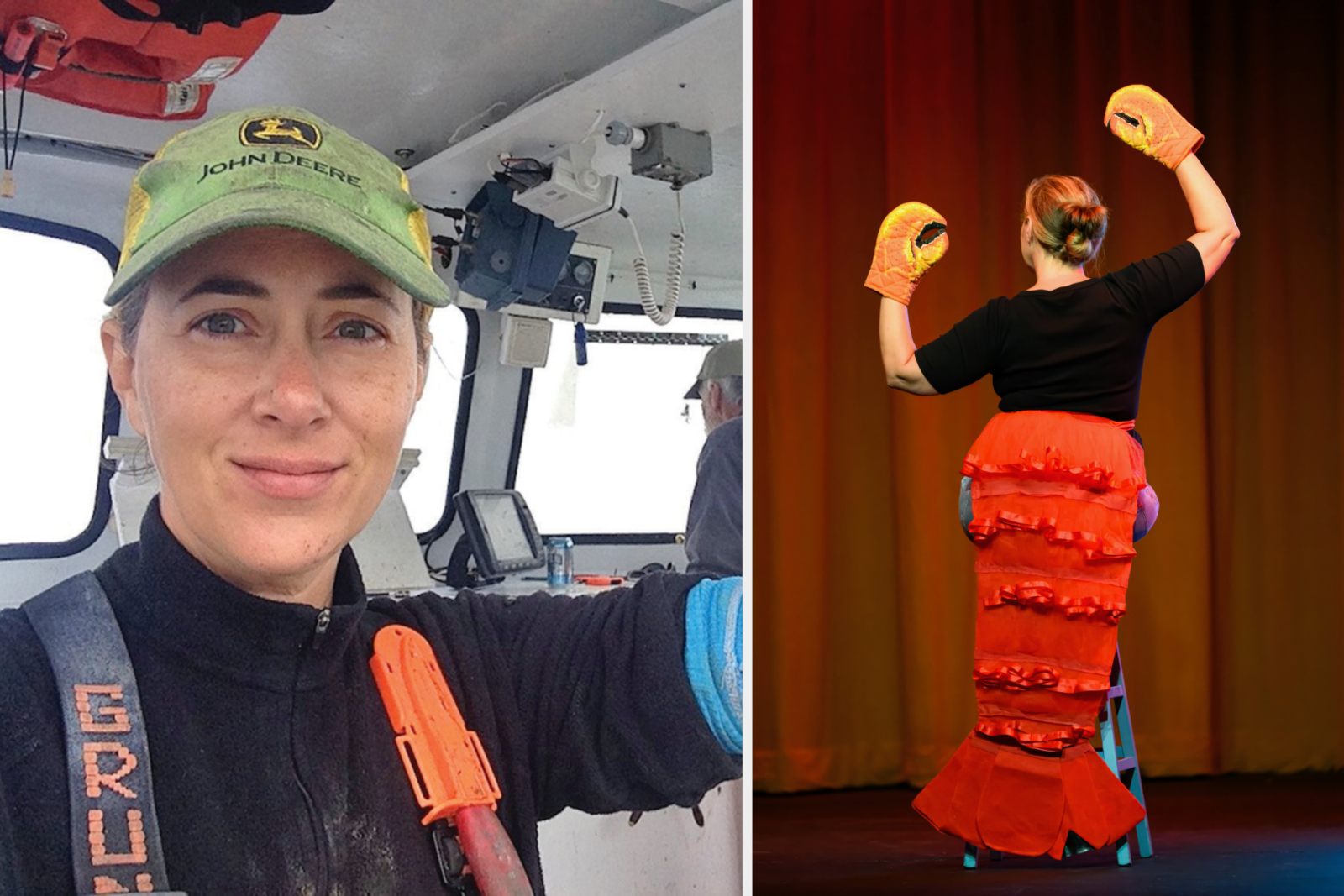
From acting and writing in Hollywood to “becoming second banana on a lobster boat,” Maine-based storyteller, performer, and writer Anna Conathan underwent a dramatic lifestyle switch — and she’s here to tell the tale.
A New Hampshire native, Conathan followed her childhood dream to Hollywood, where she found success as an actor and screenwriter. But then she got a little salty. A mid-career shift working as a sternman on lobster boats off the coast of Maine has brought her closer to nature, non-human life forms, and more specifically, the female lobster. A dramatist at heart, she’s fused both worlds together, turning her Hollywood stories and her hands-on crustacean research into a living, breathing, one-person show.
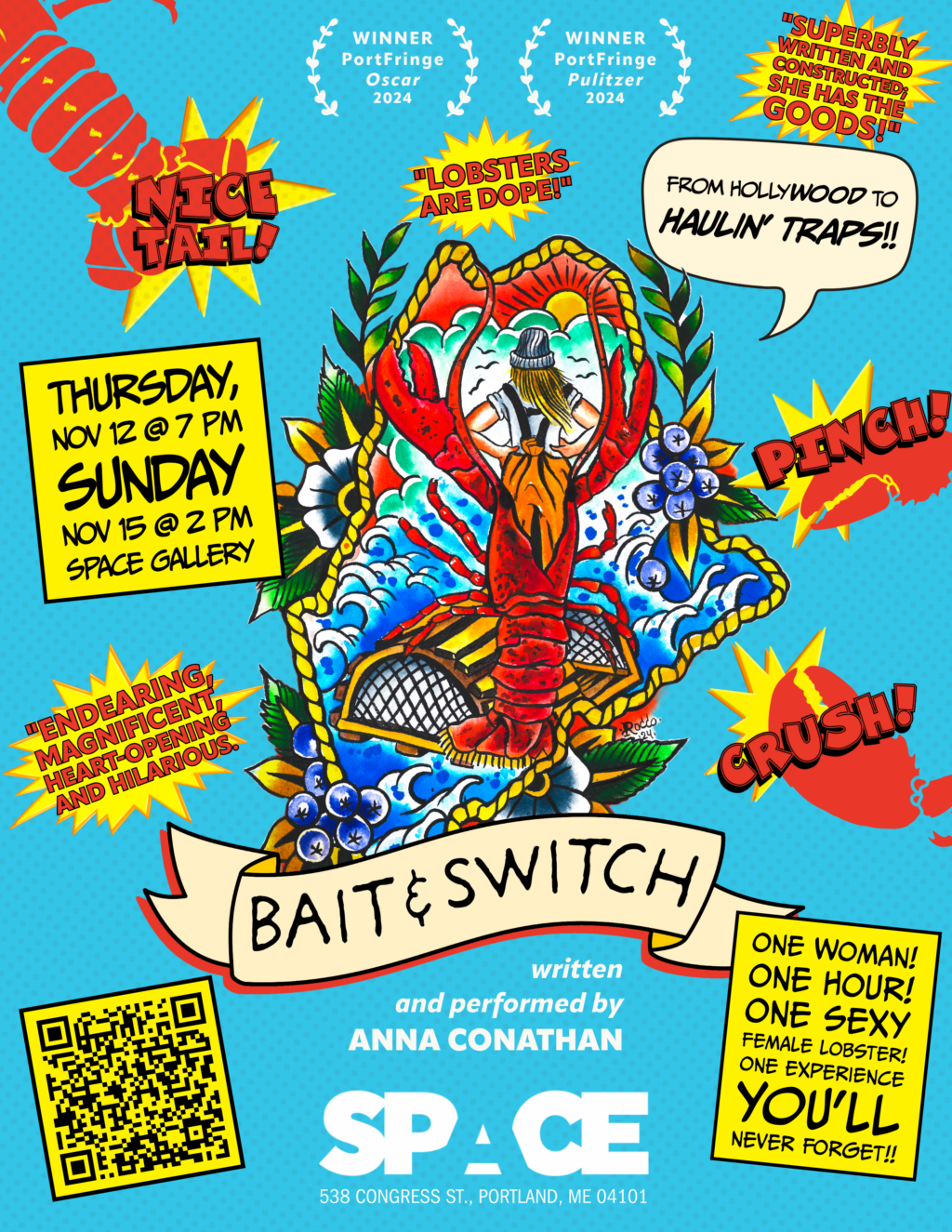
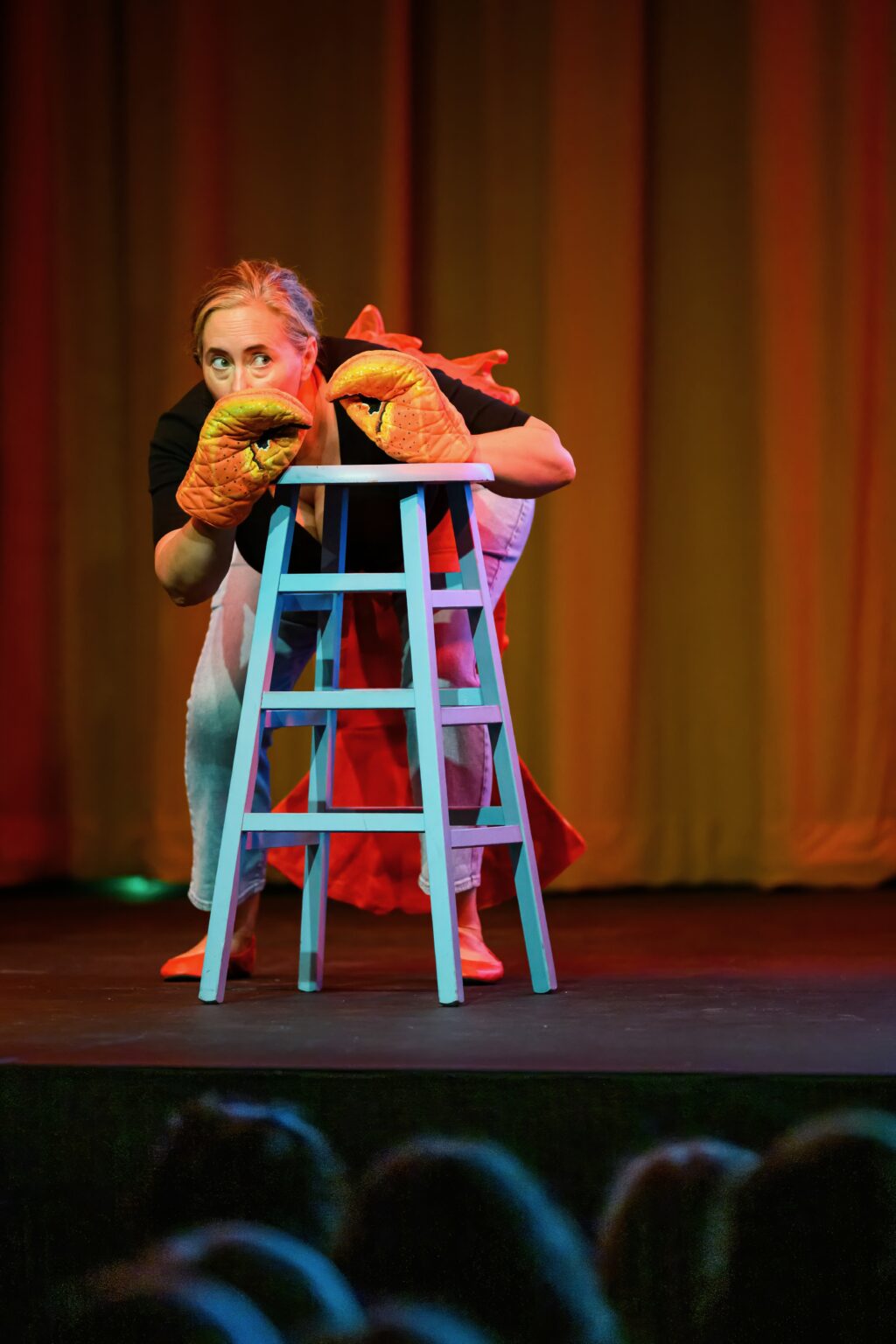
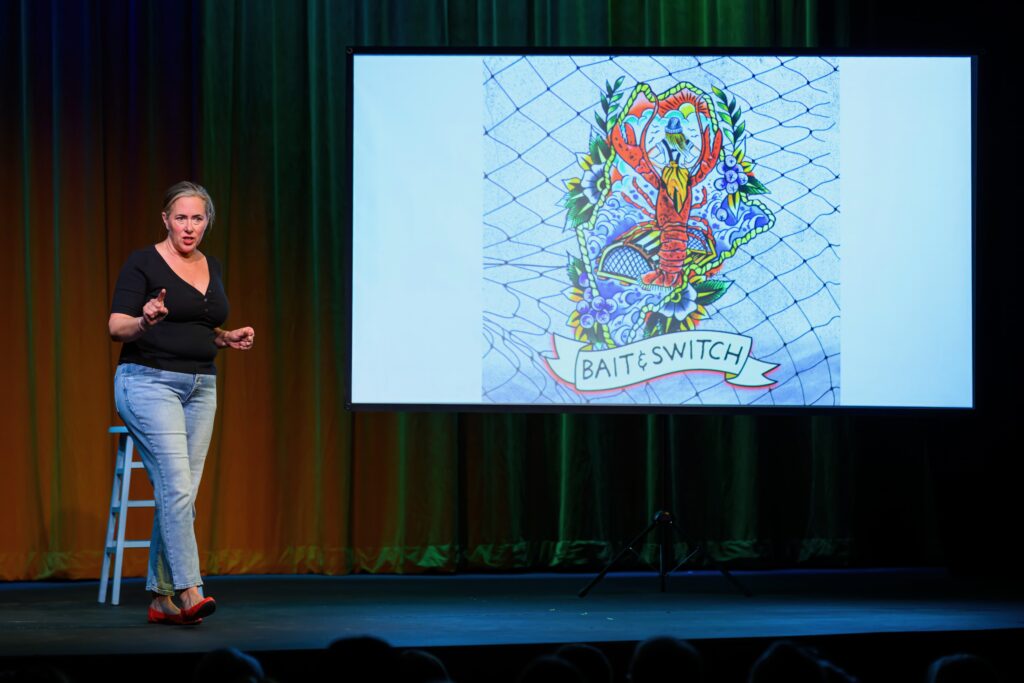
Across two performances, Conathan brings her original show, Bait & Switch: From Hollywood to Haulin’ Traps to SPACE on Thursday, November 12 and Sunday, November 15. The show was described as “heart-opening” and “hilarious” by audiences at a sold out performances at Stonington Opera House in Downeast Maine — proving the material can play for an authentic coastal Maine crowd (it’s also a little thematically spicy and geared for audiences aged 16+).
SPACE intern Scarlett Downes spoke with Conathan ahead of the SPACE performances to learn more about her witty and well researched take on lobstering and life.
This interview has been edited for clarity and length.
SPACE: How would you explain to people what [your show] Bait & Switch: From Hollywood to Hauling Traps is?
Anna Conathan: Well, as a performance piece, I would say it’s a one-person show that is acting, comedy, storytelling, improv, and almost a little bit of clowning.
I moved out to L.A. to be an actress, but I grew up in a small town in New Hampshire called Freedom. It was a super tiny, small town Norman Rockwell situation, a two-room schoolhouse. I lived across from the post office and the general store, and as I aged, it didn’t feel terribly free. When I was seven, I told my parents I was going to move to L.A. to be an actress. That was always my plan. I never deviated from it. I moved to L.A., and I pursued acting, and then started doing stand-up. Stand-up led to writing, and then I became a studio screenwriter. Surprising no one, it was incredibly challenging, but it was what I had always said I wanted, and it was such a huge part of my identity. I didn’t feel terribly successful, even when I was working. Mostly, I felt like I was in fight or flight all the time.
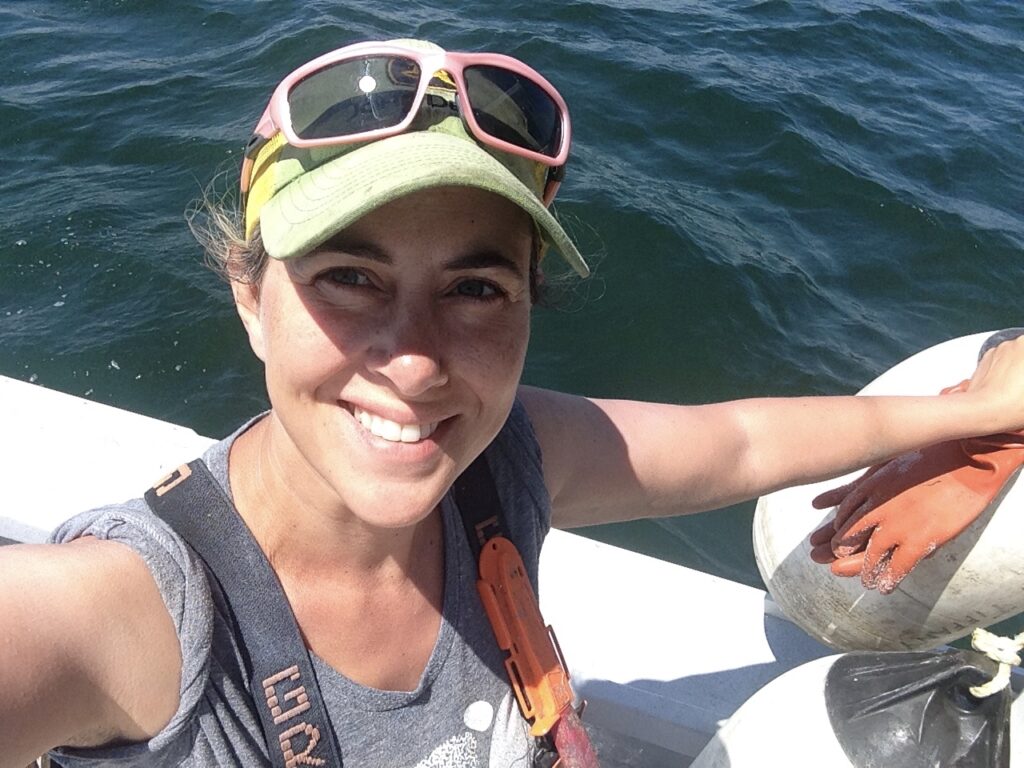
I started to research an idea I had for a romantic comedy that I was going to write on my own and try to sell on spec. I went out on a lobster boat and was astounded to discover that I liked it so much more than sitting at my desk and writing. It’s sort of this long, circuitous journey to how I went from being the femme fatale, the leading lady of my own romantic comedy — sometimes tragi-comedy — to becoming second banana on a lobster boat. It covers a broad spectrum of time and what I’ve learned from the lobster about shedding and growing. Particularly the female lobster, because she is a dominant badass.
SPACE: So would you say this switching of lifestyles made your life feel more fulfilling?
Anna Conathan: Yeah, I think it did. I’m part of a generation where you figure out what you want to be, you go be it, and you lock it in. People stay at jobs for 10, 20, 30 years. They really commit to the thing, and maybe don’t take the time to think about, Well, am I happy? Or, Is this a good fit for me? There’s a lot of suffering that I think is needless. I talked to younger friends who say, I didn’t like the job, so I left or I didn’t love the city, so I moved — which is amazing to me.
It’s like with animals in nature. If an environment doesn’t work for them, if there aren’t enough resources, if they can’t find a mate, they relocate to a new place. With Hollywood, I was so locked into that idea and it was such a huge part of my identity. When something is such a huge part of your identity, if you were to stop doing it, how do people relate to you? How do people know who you are? How do you know who you are?
I think moving to Maine was probably the most healing thing I’ve ever done for myself. Working on a lobster boat, I called up one of the captains that I had gone out with and asked, would you consider taking me on as a sternman? And he said okay.
It was more complicated than that, but moving to Maine and getting on a lobster boat changed my life completely. It also brought me back to writing and working with creative people. What I loved about doing theater growing up wasn’t present in the culture in Hollywood. When I did book a role [in Hollywood], it wasn’t rehearsing a play with the community theater or the summer stock company. It was show up, say your line, hit your mark, fuck off, and here’s your paycheck.
It was a weird thing to be successful by a Hollywood metric in the way that I was working, I was being paid well, but script after script, they weren’t getting made. So you pour yourself into something, and then it dies, and then you go find something else, and you do it again, and you do it again. It’s like if I were building houses, and every time I came back to the site where I was building a house, I was back to the foundation. I used to have a horrible problem with depression and anxiety, and after I moved to Maine and started working on the water, that hasn’t been a problem.
SPACE: After being in the Hollywood entertainment industry and coming to Maine, did you notice that you had a much different perspective than the other people you’re working with?
Anna Conathan: I am someone who’s always been very much myself. One of the things about L.A. is you can choose who you want to be in that world. I mean, we have that choice everywhere we go, but L.A. is so absurd. Particularly in my twenties, I was trying very hard to figure out how to market myself and still be myself. That’s what I was asked when I would go in for meetings around acting: How do I sell you? Who are you like? Are you like a Jen Aniston? Are you like a Lisa Kudrow? Are you like a Julia Louis-Dreyfus? Those were the stars of TV shows at that time, and I was like, no, I’m me and I’m an acting major, and I was trained to do everything, and I could play anything. But people weren’t interested in that.
When I started doing stand-up and screenwriting, I was going into meetings as myself because suddenly people were interested in what my voice was and the unique thing that I was bringing. Stand-up and screenwriting allowed me to move away from the marketing that came with being an actress. Back then it was not uncommon for someone to tell me to my face that I wasn’t good looking enough or I wasn’t thin enough. It was very rigorous, but with writing and stand-up, these are my stories, this is my voice. It was a tremendous relief to move back to New England and be able to be myself.
SPACE: What has your creative process for the show been like?
Anna Conathan: After I moved, one of my friends here in Maine convinced me to start going to open mic nights and stand-up again, and then I got invited to do some storytelling nights. I love storytelling because it doesn’t have the same expectation. When you say you’re a stand-up comic and you do a set, you are making a promise that you will make people laugh. It’s a little stressful. With storytelling, you don’t know where it’s gonna go. You’re making a promise it’ll be interesting and/or relevant.
At this point, I had done PortFringe, which is an amazing festival that happens every year in June. I had done a couple different fringe festivals with my friend who was a writer and I had been in other people’s shows, so I decided that I would put an idea for a show into the [Port]Fringe lottery.
So I wrote the proposal, got in, and started working on it with my friend Jody McColman, who is a really talented director, actor, and writer himself. I mostly procrastinated not doing it because I was terrified, and all of my Hollywood demons came back to be like, Who cares? Are you even interesting? Are you thin enough to do a one-woman show? But I pulled it together and I performed it for the first time in June of 2024 at the PortFringe Festival. And it was great, but it was messy. It was a little bit like holding a blob. Now we have a shape, but it’s a hard shape to contain.
I stripped it apart and took a class on how to build a one-person show. The second time I did it, the new version of the show, it was spiritually and energetically very much the same, but the script changed entirely.
I put my name in for the Atlanta Fringe Festival. I wanted to see, does anybody outside of New England give a shit about lobsters? And it turns out, yes! You can anthropomorphize almost anything if you’re good at it. So in May, I went down to Atlanta and did five performances in their Fringe Festival, which was intense.
I took that show and polished it up and then performed it at the Stonington Opera House. Stonington is the epicenter of the Maine lobster fishery, and it’s a big summer tourist town. It went really, really well. A huge audience. It was super fun.
SPACE: What’s it like to put on a one woman show? I imagine it’s overwhelming, but do you feel like the more you do it, the more comfortable you feel? And would you say you feed off the audience? Does it depend on who’s watching that day?
Anna Conathan: For me, the audience is everything. I love audiences. When I was doing stand-up, particularly when I was doing stand-up in L.A., a lot of the other comics in the green room would be like, the audience is the enemy, or the audience is to be won. There was a contentiousness, or an unhealthy symbiotic relationship.
Because I came from theater, instead of just coming in through stand-up, I think the audience is great. The audience wants to have a good time. I see myself as the hostess of a party. I want my audience to feel good about themselves, and I want them to feel good about me. We are all going to have a good time.
SPACE: Was the research you did on female lobsters and their behavior all fieldwork out on the boat, or did you also do some secondary at home research and reading?
Anna Conathan: My gateway to all of this was the book The Secret Life of Lobsters by Trevor Corson, which is magnificent. That’s what got my romantic coastal fantasies cooking. My first captain that I fished with was a geologist before he became a lobsterman, and he grew up on the coast. Since he was a scientist, he had relationships at Woods Hole [in Massachusetts] and with some of the local scientists in Maine who were studying water temperature.
I like to joke that I specialize in the aging lobsterman because they’re not in a rush. Elliott [the captain] always took time to show me things and make sure that I understood things about the lobster, our bycatch, and what else came up in the traps.
I’ve also interviewed a bunch of people. I took some liberties in anthropomorphizing the lobster, and I wanted to make sure I wasn’t going too far off of the fact-based scenario.
There’s a nonprofit organization I work for called Lift All Boats, and it’s based out of Luke’s Lobster, the restaurant. It’s basically a teaching boat for kids in high school because the fastest and easiest way into the lobster fishery is through the student program. Lift All Boats makes the infrastructure of lobstering available to kids who didn’t grow up on the water and didn’t grow up in fishing families. Last summer and this summer, I’ve been teaching these kids how to stern. And that is magical. It has changed all of their relationships to the environment and the water. So the science is cool, but what’s really cool is indoctrinating other people into the culture.
SPACE: I’m curious about what a typical day would look like on the boat. Is that going to be demonstrated or acted out in the show at all?
Anna Conathan: Yeah, that is 100 percent in the show. So you have to come.
SPACE: You said it’s going to change the way people think about or look at lobsters. Would you say that’s one of the main takeaways at the end of the show?
Anna Conathan: Yeah, I do think it’ll change the way people look at lobster. I found that when I really started looking at the lobster, I could only look deeper. I didn’t want to look away. There’s so much more to know. And then if there’s this much more to know about lobster, what else?
What if we just started paying a little bit more attention every day to the environment that’s around us? What would change intrinsically inside of us if we recognized ourselves as a part of nature and got curious about what’s happening to the life forms around us?
Anna Conathan’s show Bait & Switch: From Hollywood to Haulin’ Traps | Thursday, November 12 at 7 pm + Sunday, November 15 at 2 pm. | SPACE, 538 Congress St., Portland | Tickets: $20 advance, $25 day of show | Tickets at SPACE538.ORG
